Nutserts, rivnets, blind nuts, etc...
Posted: Thu Jun 28, 2012 8:00 pm
Nutserts. Rivnuts. Blind Nuts. Expansion Nuts. There are many names for them, but at the end of the day they should just be called handy... What is not handy, however, is the proper installation of these little gems; emphasis on the word proper. After trying my luck with a cheap Harbor Freight setting tool, I had a couple cold ones and did some thinking. There really isn't any rocket surgery as to how these things work, and after passing a few ideas by my typical sounding post (read: OG), I headed for the hardware store to make my own setting tool:
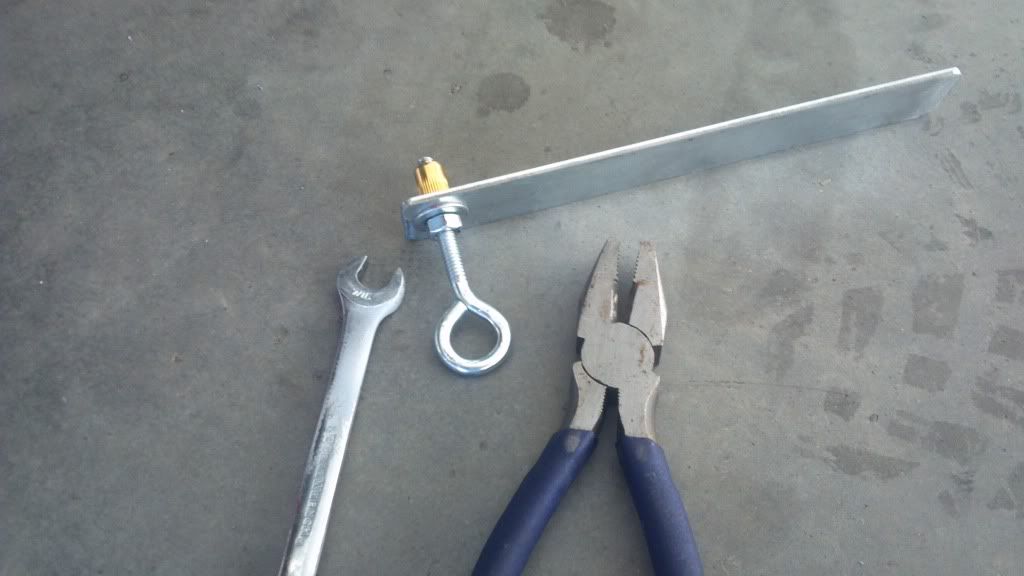
And here it is in all it's glory. A leftover section of 12ga sheetmetal with a hole drilled in it to match the size of the nutsert threads (in this case 1/4"), a flat washer, a nut, and a eye bolt. The idea is to be able to use the nut to draw the nutsert up inside itself with the threads of the eyebolt. The eyebolt could just as easily be a regular bolt, but they didn't have any full-thread 1/4" bolts, and it just so happens an eye bolt is pretty easy to keep from spinning with either a pair of pliers or a screwdriver poked through the loop... At any rate, here is the little jewel in action:
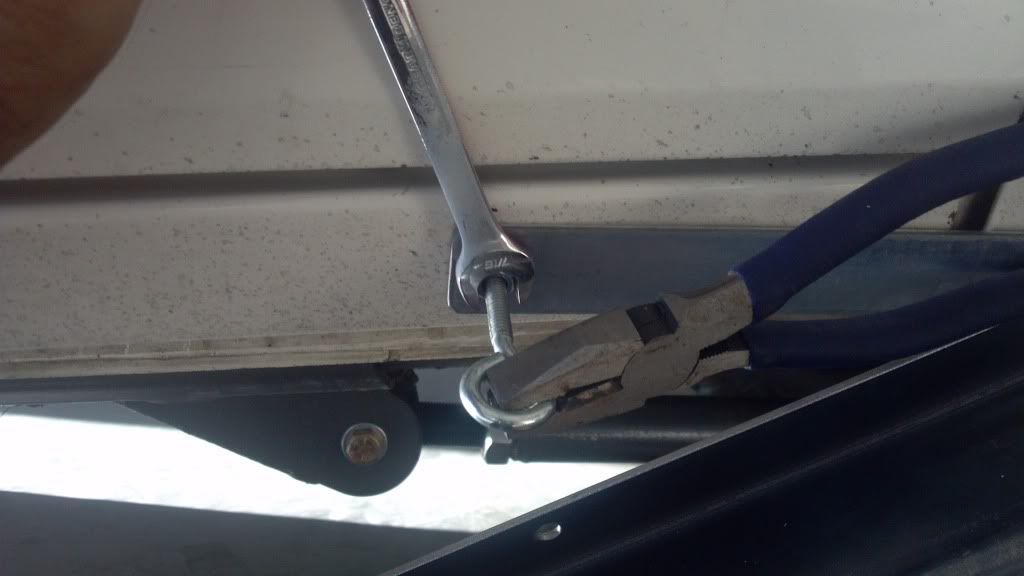
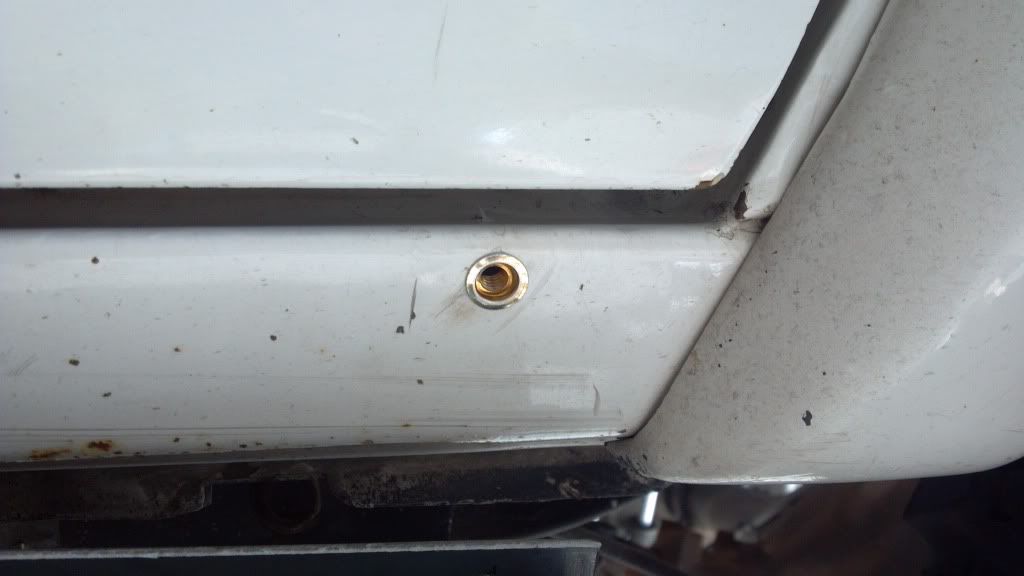
The 12ga presses against the face of the nutsert to keep it from spinning and in alignment, the eyebolt provides the threads to "suck" the nutsert inside itself, the pliers keep the eyebolt from spinning, and the end wrench turns the nut to draw the nutsert up on the aforementioned threads. Simple, inexpensive, and best of all, it works like a charm.

And here it is in all it's glory. A leftover section of 12ga sheetmetal with a hole drilled in it to match the size of the nutsert threads (in this case 1/4"), a flat washer, a nut, and a eye bolt. The idea is to be able to use the nut to draw the nutsert up inside itself with the threads of the eyebolt. The eyebolt could just as easily be a regular bolt, but they didn't have any full-thread 1/4" bolts, and it just so happens an eye bolt is pretty easy to keep from spinning with either a pair of pliers or a screwdriver poked through the loop... At any rate, here is the little jewel in action:
The 12ga presses against the face of the nutsert to keep it from spinning and in alignment, the eyebolt provides the threads to "suck" the nutsert inside itself, the pliers keep the eyebolt from spinning, and the end wrench turns the nut to draw the nutsert up on the aforementioned threads. Simple, inexpensive, and best of all, it works like a charm.